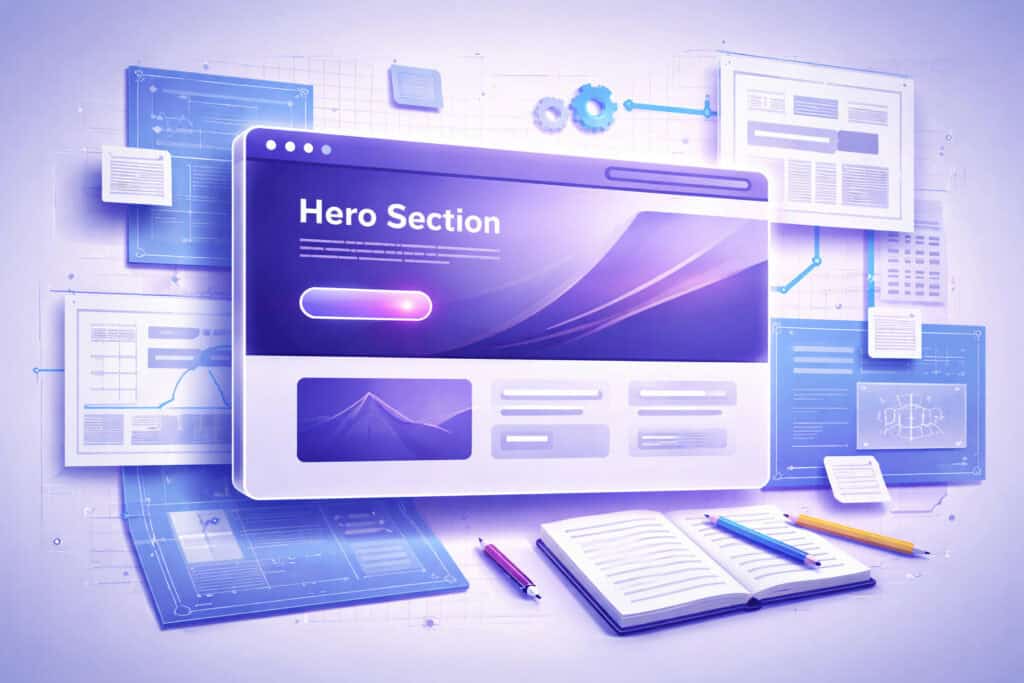
Why I Rely on Structured Hero Sections When Building WordPress Sites
Hero sections tend to get reduced to visuals — big images, bold headlines, maybe a button. But after building a lot of WordPress sites over the years, I’ve learned that hero sections are really about structure. When they’re built well, they clarify messaging, guide attention, and make future updates easier instead of harder.
This post is a lighter, more reflective follow-up to a recent MKS Web Design article where I break down how we use Smart Slider to build high-impact hero sections for client sites. If you want the technical and implementation details, you can read the full piece here:
Using Smart Slider to Build High-Impact Hero Sections in WordPress
The real role of a hero section
A hero section isn’t there to impress designers. It’s there to orient visitors. Within a few seconds, someone landing on a page should understand what the site is about, who it’s for, and what they should do next.
When hero sections are treated as static images, they often get frozen in time. Messaging changes, services evolve, seasons shift — but the hero stays the same because updating it feels risky or annoying.
That’s usually a structure problem, not a design one.
Why structure matters more than visuals
What I care about most when building hero sections is whether they can adapt. A strong structure lets you change content without redesigning the entire section every time.
- Messaging can rotate without breaking layouts
- Calls to action stay consistent even when copy changes
- Design decisions don’t have to be re-made every update
- Clients can safely change content without touching styling
This is why I prefer hero sections built from repeatable components instead of one-off designs. They’re easier to reason about and much harder to accidentally break.
Dynamic hero sections (used intentionally)
I’m not a fan of sliders everywhere. But I am a fan of dynamic hero sections when they solve a real problem — like highlighting multiple services, rotating seasonal messaging, or surfacing key offerings without overwhelming the page.
When dynamic hero sections are paired with performance awareness and clear content hierarchy, they stop feeling gimmicky and start feeling purposeful.
The key is restraint. Fewer slides. Clear headlines. One primary action per slide. Anything beyond that usually hurts more than it helps.
Content control without design chaos
One of the biggest benefits of structured hero sections is how they separate content from design. When content lives in well-defined fields and layouts are locked into predictable patterns, updates become boring — and boring is good.
Clients don’t need to understand spacing systems, breakpoints, or CSS rules. They just update text, swap images, and the design holds.
Why this matters long-term
Websites rarely fail all at once. They decay slowly. Inconsistent sections, outdated messaging, fragile layouts — all of it adds friction over time.
Hero sections built with structure tend to age better. They’re easier to revise, easier to optimize, and easier to align with changing business goals without needing a full redesign.
My final thoughts!
For me, hero sections are less about animation or visual tricks and more about clarity and control. When the structure is right, the visuals can evolve without becoming a liability.
If you want the deeper, hands-on breakdown of how this looks in real client builds, the MKS Web Design post goes into much more detail: Using Smart Slider to Build High-Impact Hero Sections in WordPress
